
Meet the Qrew

Updated: Apr 13
Getting "back in the boat" with the Q Crew

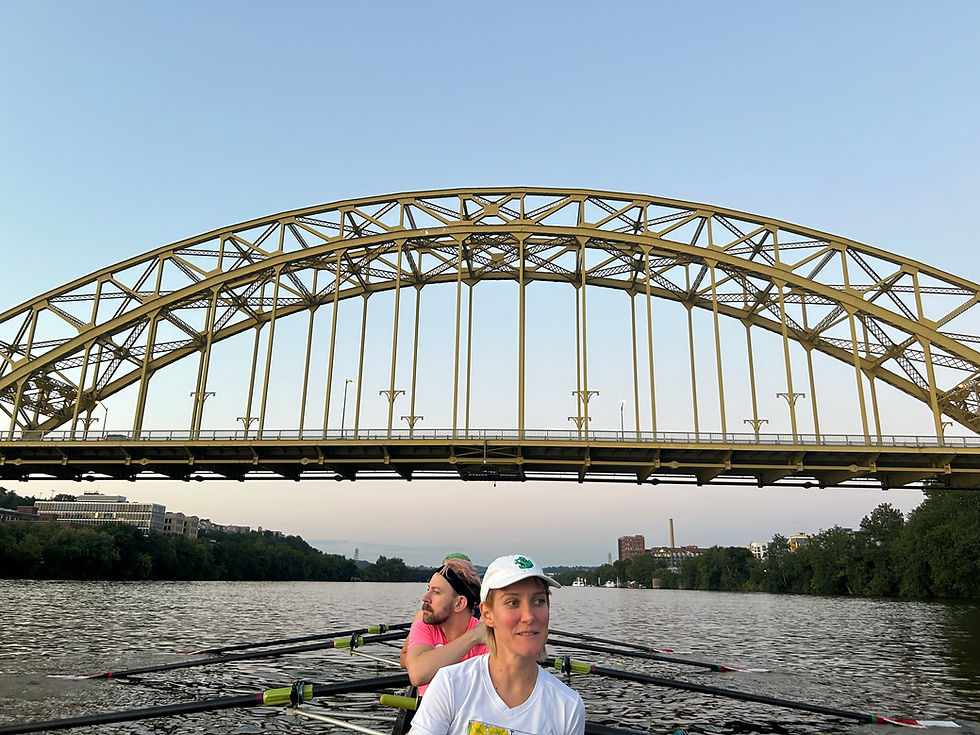
This week we are "getting back in the boat" with Julia and Emerson, two long-time rowers and members of the Q Crew, our LGBTQ+ Summer Rowing League (SRL) team at TRRA.
Julia and Emerson talk about "proprioception," or "your sense of where your body is in space"--as well as "building a sense of poise and grace."
They also shared their favorite part about being involved with the rowing community: "I've been in this sport for a very long time, so there's the continuity of it. I also always welcome new people joining."
What does the 'Q' in Qrew mean? "In a literal sense — we're a queer team. It's an LGBTQ organization, a way for folks who are part of this broader community to meet each other and engage in the sport together. . . there's something powerful about the visibility of actively, physically being here — not hiding. We're right there if you want to come see us."
To learn more about Qrew and read the "pamphlet-worthy" answers that Julia and Emerson provided in our interview, continue reading below.
Registration is open now for SRL, including the Q Crew. Contact kimthomson@threeriversrowing.org with any questions.

What are you most excited about to get back on the water?
Julia: For me, it really is just getting back on the water and specifically getting in that seat. Since I coach and I sit in the launch, it's honestly helpful to get that other perspective. Yes, I know what I'm doing as a coach, but the ability to get back in that seat gives me a better perspective on actually being able to teach those kids. I also just like the community aspect of it — really like going down to the boathouse and hanging out.
Emerson: From a "why rowing" point of view, I think Pittsburgh has this wealth of natural resources in our rivers. I work in water and sustainability, so I talk to people a lot about how underutilized our rivers are as a resource for recreation. There have been all kinds of efforts to create river trails and increase the number of people getting on the water in kayaks and stand-up paddleboards. There's this region-wide effort to make better use of our rivers.
I think rowing is really unique among sports and community activities in that you can get right on the water, and you're not doing it in a solitary, reflective way — you're engaging with a whole team and building community connections while taking advantage of this incredible natural resource. What used to be polluted and totally unusable is still not 100%, but it's getting better all the time.
For me, rowing has always been about connecting with the natural world and connecting with people. It's the best of both worlds.
Aodhán: We're gonna put that on the pamphlet.

Have you all made some friends through rowing?
Julia: There's definitely a really nice social aspect of our team. There's the socialization that happens at the boathouse itself, but we'll also do socials — go to Harold's Haunt or hang out at somebody's house. The community has been pretty strong. It's not something that stays at the boathouse, which can sometimes be a struggle with team sports — relationships built at the basketball court or boathouse don't always travel. In our case, we've gotten really lucky and it has transcended that space.
Emerson: I think we have an advantage as Q Crew because we're a queer team and we have this commonality across all our rowers — something we all share — that links us and helps us build those relationships within the team. We're kind of unique in that way among the summer rowing league teams I know about. But even where there's less of a shared theme or connection across rowers, there are still really good opportunities to build friendships, get to know folks, and be part of the rowing community.

Where have you all been able to travel with Qrew?
Julia: We haven't. Summer rowing league doesn't travel. We do have a couple of big regattas during the summer. The sprint race in the middle of the summer is more of a local affair, but the Head of the Ohio draws people from all over, so we get to experience that regatta environment. But as a league, we just row right here at home.
What, in your opinion or experience, is a primary physical benefit of rowing?
Julia: Rowing is a really interesting sport — it's intensive cardio while also being a relatively intensive anaerobic exercise. The physical movement of the sport... I was taught at Syracuse that it's as simple as getting out of a chair, but it's almost like a deadlift in form. Imagine running a race, but instead of running it, you're pulling it — that's basically what rowing is. There's a double-whammy aspect: you're getting the strength component and the cardio side of it as well.
Emerson: In addition to the fitness benefits, rowing is really good at developing proprioception — your sense of where your body is in space. You have to be in tune with the other rowers in your boat timing-wise, and you have to be balanced, centered over the keel, keeping the boat steady. So as well as working really hard and getting in shape, you're also building a sense of poise and gracefulness.
Julia: One of my favorite drills is eyes-closed rowing, which isn't something you can do in many sports. Running, you need to see where you're going. But in rowing, there's a coxswain, so you can really turn the eyes off, tune out the external world, and focus on what's happening internally in your body. It tends to really help, and it leads into what Emerson was talking about — developing that sense of poise.
What is your favorite part about being involved with the rowing community?
Julia: I think for me it's a sense of continuity. I've been rowing a long time — I rowed in high school and college, and I came back to it after a few years off. It's really cool to continue a practice I've been engaged in for a long time, with different communities and in different ways. I used to be a competitive rower; now it's much more recreational. But the practice itself is the same all the way through, and that's a strong reason I keep coming back.
It's also a chance to bring people together around this practice that's valuable to me personally. I've been serving as captain of this team for the last two years, and it's really cool to keep this thing going and bring new people into the sport — something that's been part of my life for a long time.
Emerson: Pretty much on the same page. I've been in this sport for a very long time, so there's the continuity of it. I also always welcome new people joining.
I think rowing is especially unique in that it's one of the most team-focused sports out there. Yes, there are smaller categories where you can row independently, but the teamwork aspect is integral — and that's hard to come by. As sports become more individualized and focused on personal performance, the ability to collaborate and work together is something that's really strong in rowing.
Julia: I also like that — especially from a youth perspective, though it carries into adults too — rowing is a sport where whenever you join, whether in middle school or high school, it's very unlikely that anyone on that team will have a massive experience advantage over you. Everybody is literally starting on the same boat. That transfers into the adult leagues as well. Yes, you have people like Emerson and me who've been rowing for several years, but the gap is more like ten versus twenty years — not decades of inaccessible skill. It feels very accessible. You're not the only person figuring it out for the first time, because nobody can hop in a boat at age two.

What does the "Q" in Q Crew mean to you?
Emerson: In a literal sense — we're a queer team. It's an LGBTQ organization, a way for folks who are part of this broader community to meet each other and engage in the sport together.
On a personal level, one really cool thing about being a queer team is that we have a long history. I've only been involved for four or five years, but some of the older members of our group have a history with queer sports in Pittsburgh going back to the nineties — people who traveled internationally for the Gay Games. So as well as being a space for folks new to the sport or new to community to come together, it's also a connection to the longer cultural history of queerness and LGBTQ community.
Julia: I'd agree with Emerson. Queer people have existed forever and have been in sports for a very long time, but it has often seemed like they were on the fringes of sports culture. We've seen how visibility has shifted things — look at what's happened in hockey with the PWHL or the NHL. It's made an impact. So I think there's something powerful about the visibility of actively, physically being here — not hiding. We're right there if you want to come see us.


Really Good BLog https://www.threeriversrowing.org/post/meet-the-qrew
La cábala de los números presenta información útil para quienes buscan conocer la relación entre los sueños y los números. Todo está explicado de forma sencilla y ordenada, facilitando la lectura y permitiendo encontrar cada tema con rapidez y facilidad.
The wide tracks in snowrider are more than simple scenery—they create natural breathing spaces after intense challenges. Players can stabilize their movement, adjust their timing, and regain momentum before facing another demanding series of obstacles, making every run feel rewarding.
Thank you for sharing your perspective. Content like this always enriches the discussion.
podlogi24.net
The challenge in coreball comes not from complicated rules but from recognizing patterns and making accurate decisions.